


 |
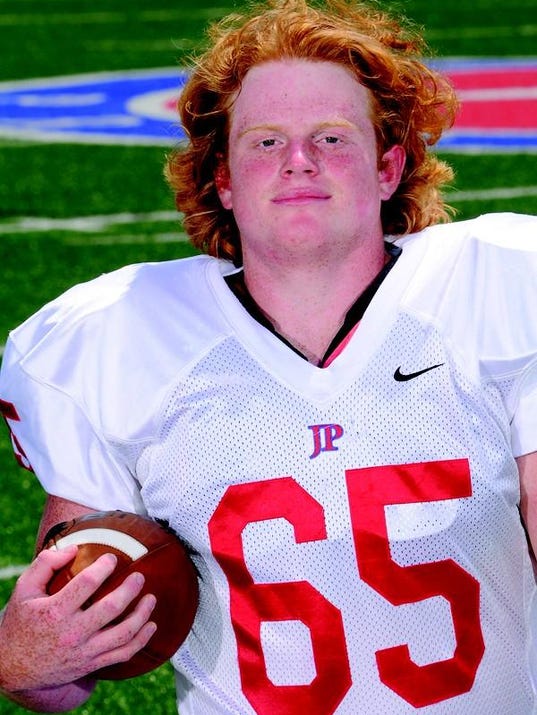
| Walker Wilbanks |
"Please don't overreact. Don't let this alter the way you prepare for games," he said. "Friday night was an isolated incident. He couldn't have prepared for it. No one could," Pressler said. "There are times where there are no answers medically, and that's what we're dealing with here."
I'm not a doctor but I disagree with this one. There are certainly some unanswered questions, such as whether or not Wilbanks might have been taking a diuretic, for example (which can cause hyponatremia), but I'm not willing to accept that such deaths can't be prevented.
First, I only played football for a single year. I was terrible. But I remember on really hot days the coaches would give us salt pills. My understanding is that salt pills are no longer given. Why? I've never heard of anyone dying from taking a proper dosage of salt pills before a football game, but I now know of one who died because of a lack of salt in his system.
Second, when football players practice and play in extreme heat bad things, including the possibility of death, are more likely to happen. The high temperature at the Jackson airport on August 23 was 93 degrees. At 6:53 the temperature was 90 with a heat index of 95.4. These temperatures were recorded on the outskirts of the city, and are likely lower than those that existed on the Jackson Prep field. I think it is obvious that had temperatures been cooler Wilbanks would be alive today.
Following the death of a football player to heat stroke the state of Kentucky adopted rigid rules concerning practices in heat. With a heat index of 95 or above the following steps are required:
Provide ample amounts of water. This means that water should always be available and athletes should be able to take in as much water as they desire.Unlike a practice, a football game doesn't allow 10-minute water breaks every half rour. Players can't always remove their helmets. And the outside activity can't be reduced or postponed.
Mandatory water breaks every 30 minutes for 10 minutes in duration
Ice-down towels for cooling
Watch/monitor athletes carefully for necessary action.
Contact sports and activities with additional equipment
Helmets and other possible equipment removed if not involved in contact.
Reduce time of outside activity. Consider postponing practice to later in the day.
Re-check temperature and humidity every 30 minutes to monitor for increased Heat Index.
But there is a solution: Don't allow football games in August!
School traditionally began the Tuesday after Labor Day, with the first football game perhaps the Friday after Labor Day. Labor Day marks the end of summer for a reason; temperatures drop with every passing day.
I don't blame anyone for Wilbanks' death. But in hindsight it wasn't a "freak," unpreventable occurrence. It was predictable and preventable. We need to attempt to discover as many facts as possible and work together to prevent such deaths in the future.
We can prevent future deaths by banning August football games and by making sure players have a high enough sodium level, whether it's achieved with salt pills, energy drinks, or something else. As a state we need to regulate football practice conditions as well. These changes can come from the athletic associations or from the legislature; I don't care which.
As a state we have a choice. We can make some changes, or we can decide to bury some more teen-agers. Because when another kid dies, it won't be a "fluke." It will be because we allowed it to happen.

